How does ADVANCED HUMAN PERCEPTION work?
| Perception is the process by which external or internal stimuli affecting the body are converted into nerve impulses, transmitted through receptors to the central nervous system and consciously perceived there. During evolution, neurons capable of detecting stimuli from the outside world and the body’s internal environment also developed. These are receptor cells. Different receptor cells have become specialised in detecting different types of stimuli. In these various receptors, essentially the same change occurs in response to stimulation. Whether the receptors are activated by mechanical, chemical, thermal or light stimuli, the energy contained in the stimulus is converted into electrical energy. This energy is transmitted to the central nervous system, where it produces a specific change or sensation. All our sensory organs are directly connected to the brain. Our fingertips also contain millions of nerve endings connected to the brain, making them capable of highly refined perception. The materials and bodies found in nature are composed of atoms that operate according to the laws of quantum mechanics. Signals from subatomic vibrations associated with a material interact with the vibrations travelling through the nerves of the human body. This creates a perceptible interference pattern that can be identified. In this way, a wide variety of materials can be distinguished, including the neural, organic and other physical components of the human body. | 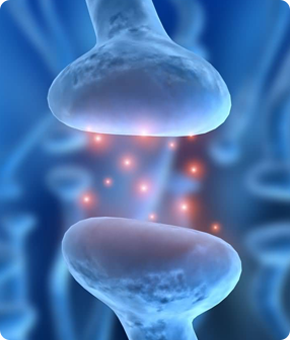 |
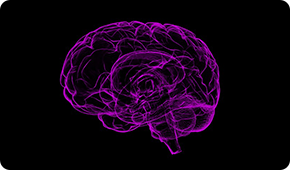 | Perception is an ancient ability. Many marine creatures still use this ability successfully today. Our ancestors practised it during the aquatic stage of evolution because water conducts vibrations 7.5 times more effectively than air. Children between the ages of 5 and 10 still possess this perceptive ability. However, if they do not practise it, this ability is lost. This is also supported by researchers at the University of California, who used EEG equipment to record the brainwaves of 59 adolescents while they slept over a period of five years. According to the researchers, the measured changes coincided with a process known as synaptic pruning: some of the connections between nerve cells are lost in particular areas of the brain, while the frequency of the corresponding brainwaves decreases. As a child’s brain develops, it determines which neural connections to retain and which are no longer important. Researchers believe that connections that are rarely used eventually disappear. |
| It is clear that if we relearn and regularly use this ancient form of perception, the neural connections associated with it will also become stronger. “During the ADVANCED HUMAN PERCEPTION courses, I will teach you how to reactivate this forgotten, ancient perceptive ability—because this ability lies dormant within you too!” Dr. Ulrich Franz | .jpg) |